
Alessandro Tarshahani on building a creative studio where human taste leads and AI brings the speed.
For twenty or thirty years, most of us worked the same way. Fixed routines, fixed workflows, a clear path from school to university to a title that proved we knew enough. Then AI arrived and changed almost everything at once.
Many people were scared. I understand why. When the ground moves that fast, it feels like losing something.
For me it felt like the opposite. I saw what I could achieve with AI on my own, and what I could achieve with AI together with other people. That was the moment ALETRA started.
Three things I love, one scene I know
ALETRA brings together the three things I love most: branding, advanced web design and cinematic content. And it brings them to the place I know best, hospitality.
I didn’t choose hospitality from the outside. I worked in hotels, in bars and in clubs. I worked in theatres. I grew up in a family and a culture where food was never only food: it was how people met, argued, celebrated and stayed close. I know the emotions that happen between people and food, music and events. That is what I want every brand I work on to carry.
Not an agency. A space.
ALETRA is not a traditional agency, and not a company in the old sense. I think of it as a space, an idea that can hold a small team or a large one, working on one project or several at the same time. It doesn’t depend on one office or one city. The work can be made wherever the right people are, with the best technology available today, towards one goal: the client’s goal, and the best work possible.
The name carries the person behind it: ALE from Alessandro, TRA from Tarshahani. The symbol is a butterfly, from a line of Arabic poetry by Mahmoud Darwish: the butterfly’s trace cannot be seen; the butterfly’s trace never fades. A brand doesn’t have to be loud to be remembered. It has to leave a trace.
“Isn’t AI just stealing?”
Recently I wrote that I use AI in my work, and someone replied that AI is stealing from other people, because it learns from patterns that humans created.
The first part is true. AI learns from patterns. But calling that stealing doesn’t hold up, because it is exactly how every creative person has ever learned. The most original artist you can name saw other people’s work first. They listened to music, read poetry, studied designs, and were taught by someone. Creativity has never come from nowhere. It comes from everything we have taken in, reshaped by who we are.
AI is not so different from us in that sense. It is just much faster.
That is why ALETRA’s line is Human taste. AI speed. I will never be as fast as a machine. But the machine can help me move faster, so that more of my time goes into the part only a human can do: deciding what is worth making, what it should feel like, and who it is for.
What AI changes about growing up
In the past, knowledge was the gate. You had to go to specific schools and earn specific titles to show that you knew enough. Today much of that knowledge is one question away.
I don’t see that as a loss. It leaves us with the part that was always the most valuable: the ability to create. And it asks every one of us an honest question. Are we creative, able to build something of our own, or are we only consumers of what the world hands us?
What ALETRA is for
That question is the whole point of ALETRA. I want to build a space that helps people grow and helps projects grow. A space that combines technology with authenticity, and the way we live and work today with what is coming next. And a space that gives a little more freedom to everyone who becomes part of it.
The machines can do more and more of the making. The deciding, the taste and the meaning are still ours. That is the work I want to do.
Alessandro Tarshahani is the founder and creative director of ALETRA, a studio for branding, web design and cinematic content for hospitality, based in Berlin and working worldwide.
aletra.co · contact@aletra.co
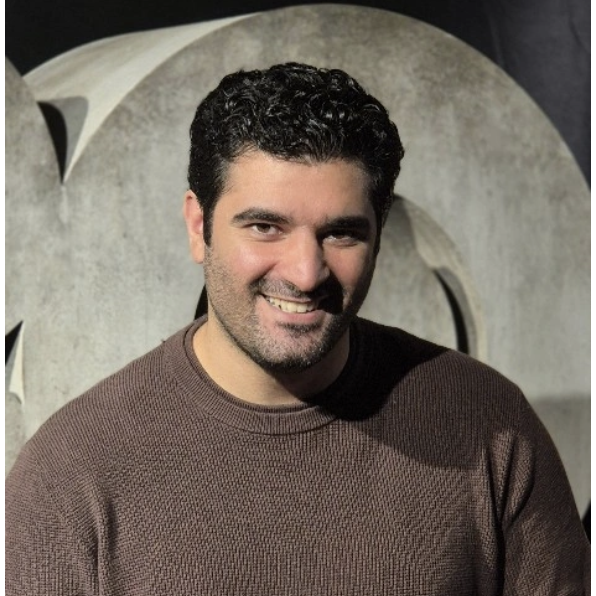
Alessandro Tarshahani
Founder & Creative Director, ALETRA
Alessandro Tarshahani is the founder and creative director of ALETRA, a Berlin studio for branding, web design and cinematic content for hospitality.
Related Posts

The Havaianas Theory of Creativity
By Juliana Akemi Masaoka

Career Change
By Maria Gabriela de Mattos

One Year In: What Becoming an Entrepreneur Really Taught Me
By Marcela Sperduti