There is a romantic version of entrepreneurship that appears in our feeds every day. It celebrates freedom, flexibility and independence. It talks about building something of your own, choosing your clients and creating a life without corporate constraints.
Some of that is true.
But almost one year after launching MZK, I have realised that entrepreneurship has much less to do with freedom than it has to do with learning. Learning about markets, about business, about yourself and about the many responsibilities that suddenly become yours. It is a continuous process of testing assumptions, adjusting direction and making decisions without having all the answers.
In September, MZK will celebrate its first anniversary and, looking back, I realise that this journey has been much broader than I imagined. It has taught me about different markets, about positioning a consultancy, about business development, about the relationship between my personal brand and MZK’s brand and, above all, about the kind of consultancy I want to build.
Building a business is different from building a career
One of the first things that became clear is that building a business is completely different from building a career.
For years I worked inside multinational organisations, leading international projects, managing budgets, coordinating teams and driving digital transformation initiatives. That experience remains the foundation of everything I do today and it is exactly what gave me the confidence to start MZK.
At the same time, entrepreneurship quickly showed me that experience alone is not enough. Running a business requires a completely different perspective.
You are no longer responsible only for delivering great work. You are responsible for creating the opportunity to deliver it. You think about business development, commercial strategy, contracts, finances, marketing, partnerships, investments and long term planning, often all on the same day.
Every decision has a direct impact on the future of the company, which makes the learning curve both exciting and demanding.
The business model I believed in became even stronger
Perhaps the biggest confirmation this year gave me was that my intuition about MZK’s business model was right.
Long before creating the consultancy, I believed that a network based model was the way I genuinely wanted to work. I never wanted to build a traditional consultancy that tried to do everything internally. I have always believed that the best solutions come from bringing together complementary expertise around a shared challenge. Businesses have become too complex for any individual or any consultancy to have all the answers.
This first year reinforced that belief even more.
Some of the projects I enjoyed the most happened because we connected the right people, combined different perspectives and built solutions collaboratively. Looking back, I realise that “Connecting the Dots” was never just a tagline. It is the way I naturally work, the way I solve problems and the type of consultancy I want MZK to become.
Building credibility takes time
One thing entrepreneurship confirmed very quickly is that your first clients will probably come from people who already know your work. They have seen what you can deliver, trust your experience and are willing to recommend you because they know the value you bring.
That was certainly my experience, and I will always be grateful to those first clients and partners who believed in MZK from the very beginning.
The real challenge starts afterwards. At some point, you need to introduce your consultancy to people who have never worked with you before. You move from recommendations to cold outreach, long shot prospects and conversations where your company has no history with the client. That is where business development becomes much more demanding.
MZK is still a young consultancy, but the experience behind it certainly is not. Everything I bring to clients today comes from years of working inside global organisations, leading teams, managing complex communication ecosystems and supporting transformation programmes across different countries.
The challenge is learning how to translate that experience into trust when your company’s history is still being written.
Initially, I found that frustrating. Today, I see it differently.
Every company starts somewhere. Every consultancy had its first client. Every recognised brand was once completely unknown. The important thing is not trying to accelerate that process artificially, but continuing to demonstrate value every time a new opportunity appears.
Then comes the financial education nobody talks about
Another aspect of entrepreneurship that surprised me was the financial learning curve.
Inside a corporation, investment decisions usually happen within an established structure. As an entrepreneur, every euro has a purpose and every investment competes with another priority.
Should I invest in another course? Should I buy a new AI tool? Should I outsource a specific capability? How much should I save for quieter periods? How much risk is healthy for the business at this stage?
These questions become part of your routine much faster than I expected.
They also introduce something that almost every entrepreneur knows very well: uncertainty.
There are weeks when everything seems to move forward at the same time and there are others when projects take longer to close, clients postpone decisions and the pipeline becomes less predictable. It is impossible not to feel anxious occasionally.
But then I started thinking differently
Then, somewhere during this first year, I caught myself asking a simple question: What exactly is certain today?
For a long time we associated large corporations with stability and entrepreneurship with uncertainty. I am no longer convinced that distinction is so clear. Markets change faster than ever. Organisations restructure. New technologies redefine entire industries in a matter of months. Careers that once looked predictable no longer follow the same path. Perhaps entrepreneurship is not necessarily less secure. It is simply more honest about the fact that certainty has become increasingly rare everywhere.
That thought changed my perspective considerably.
Instead of focusing on the uncertainty itself, I started focusing on what I could actually control. Building relationships. Diversifying opportunities. Continuing to learn. Expanding my network. Refining MZK’s positioning. Those became much healthier priorities than trying to eliminate uncertainty altogether.
I also discovered the kind of consultant I want to be
This first year also helped me understand much better how I genuinely like to work with clients.
One of the reasons I decided to become a consultant was the flexibility of working across industries and continuously learning from different business challenges. That has been exactly as rewarding as I imagined.
What surprised me was something else.
I realised that I don’t enjoy the traditional consultancy model where you assess a situation, deliver a presentation and move on to the next client. That distance has never felt natural to me.
The projects I value the most are the ones where we become part of the client’s reality. Where we assess together, design together, deliver together and execute together. Real transformation rarely happens through recommendations alone. It happens when strategy and execution move in the same direction and when the consultancy works as an extension of the client’s own team rather than as an external supplier.
That is probably one of the clearest conclusions I take from this first year. MZK is not becoming the consultancy I thought I wanted to build twelve months ago. It is becoming the consultancy that reflects how I genuinely enjoy working.
The moments that make it worthwhile
Of course, entrepreneurship also comes with moments of doubt. Not every proposal turns into a project, not every conversation leads to a new opportunity and not every month follows the same rhythm. Learning to deal with that unpredictability is probably one of the biggest adjustments, especially after spending years in environments where planning and forecasting were part of everyday business.
At the same time, entrepreneurship brings a different kind of satisfaction. There is something incredibly rewarding about sending your first invoice for a consultancy project, receiving feedback that confirms your work made a meaningful difference or seeing an idea that started as a concept gradually become a real business. Along the way, you also meet people who stop being clients, suppliers or contacts and become trusted partners with whom you genuinely want to keep building.
Those moments don’t eliminate the uncertainty, but they certainly put it into perspective. They remind you why you decided to take this path in the first place and reinforce the belief that, despite the challenges, building something of your own can be one of the most rewarding professional experiences.
(Almost) One year later
As MZK approaches its first anniversary, I don’t feel that I have mastered entrepreneurship. If anything, I have become much more aware of how much there is still to learn.
What I do know is that this year confirmed many of the intuitions that led me to create the consultancy in the first place. It confirmed that the network based model reflects how I believe business should work. It confirmed that I enjoy being close to clients and building solutions together rather than simply advising from a distance. It confirmed that previous corporate experience remains one of my greatest assets, even if entrepreneurship asks me to apply it in completely different ways.
Most importantly, it confirmed that building a business is not about having a perfectly defined path from the beginning. It is about continuing to move, continuing to learn and continuing to refine your vision every time reality teaches you something new.
One year later, I still don’t have all the answers. Fortunately, I no longer think that is the goal.
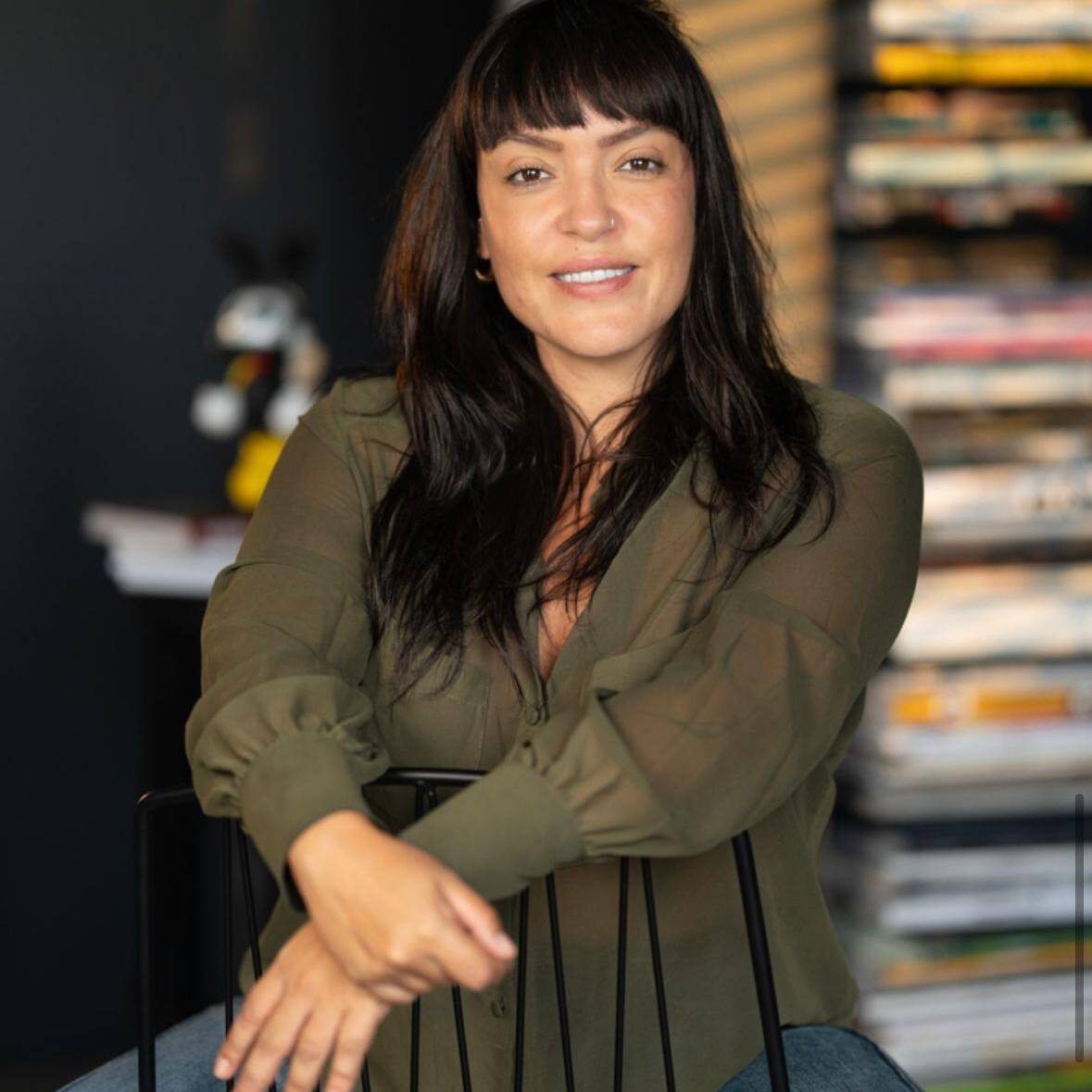
Marcela Sperduti
Founder & Managing Director MZK Consulting
Entrepreneur, communication consultant, traveller and podcaster passionate about culture, people, nature, technology, and change.
Related Posts


AI didn’t take my job. It gave me ALETRA.
By Alessandro Tarshahani

The Complex Sale Got More Complex
By Marcela Sperduti