
In the executive committee meeting room, someone asks the question everyone has been postponing: “What if AI changes our operations over the next two years?” Silence. Then comes the familiar reflex: ask for more data, more scenarios, another planning cycle. As if the problem were a lack of information.
In a career conversation with a senior professional, the same scene plays out on another scale: “What if I commit to this path and the market shifts?” The same reflex follows — lists of pros and cons, more research, more conversations with people who have already been through it. As if the problem were a lack of information.
Most of the time, it isn’t.
These questions emerge in very different contexts: executive committees looking at the next cycle, boards discussing investments, family businesses thinking about succession, senior professionals evaluating a structural career transition.
Different scales, different vocabularies. But the structure of the anxiety is the same: the script that brought a person — or an organisation — this far no longer sustains the next chapter. And the instinct is to treat this as an information problem.
I have worked in these environments long enough to see that, in the vast majority of cases, what is missing is not strategic vision. Something more fundamental is absent: clarity around first principles. An honest reading of context. Decision criteria capable of surviving the next disruption. What is missing is the architecture of small decisions.
There is a practical difference between strategy and architecture. Strategy answers the question: “What are we going to do?” Architecture answers: “How will we decide when the ground shifts?” — and the ground is shifting all the time.
Much of what we currently perceive as uncertainty is not, in fact, the absence of a map. Perhaps it is the excess of competing maps. Multiple generations within the same company, carrying radically different expectations about work, leadership, and purpose.
New technologies are reorganising entire value chains within months. Contradictory signals arrive from every direction. The nature of the problem has changed. It is no longer about anticipating what comes next. It is about discerning what is actually worth paying attention to, and which criteria can sustain decision-making.
This is where Futures Design comes in. And probably not in the way most people imagine.
It is not an exercise in prediction. Those who promise to predict the future are gurus. What Futures Design does is both more useful and less glamorous: it expands the range of futures we are capable of imagining, distinguishes what is probable from what is desirable, and — this is the important part — brings back into the present the question prediction cannot answer: what kind of future is worth building, knowing that several are possible?
The distinction between the probable future and the desirable future may sound subtle. It is not.
When we operate only through the lens of probability, we react. When we move in the direction of what is desirable, we make choices and act to build within our contexts. Good choices require architecture — criteria stable enough to withstand the next disruption, yet flexible enough to accommodate what is still unknown.
At this point, the sceptical objection usually appears — and it is a valid one: “All of this is interesting, but I need to decide on a hire next Wednesday. A structural move in my professional trajectory. A succession plan by the end of the year. An investment next quarter.”
The honest answer is this: Futures Design does not make any of those decisions for anyone. But if a leadership team is making dozens of decisions like these every year without clarifying the organisation it is building — or the trajectory it is trying to sustain — none of those decisions will add up coherently. Architecture is what allows small decisions to accumulate into something solid.
At H2+ Lab, I work from a premise that guides everything we do: biography is a strategic asset. Both the biography of a person and that of an organisation. What has been lived, decided, built, and abandoned up to this point is not a history to overcome — it is raw material for the next decision.
Ignoring this layer is what leads leaders to make decisions that are technically correct but biographically misaligned. And misaligned decisions extract a high price: sometimes in performance, almost always in continuity.
Futures do not emerge only from the trends we observe or the technologies we create. They emerge from the questions we sustain, the contexts we design, and the small decisions we repeat without realising we are deciding.
Perhaps the future is not a destination ahead of us. Perhaps it is a practice that has already begun.
And perhaps it is worth recognising that organisations are not merely structures — they are evolving organisms. Professionals are not simply careers — they are organisations in formation. The same architecture applies to both.
So the question is not: “What is going to happen?”
It is: what are you — or your organisation — repeatedly deciding today, without realising that you are deciding?
Biography is not only history. It is also raw material for the future.
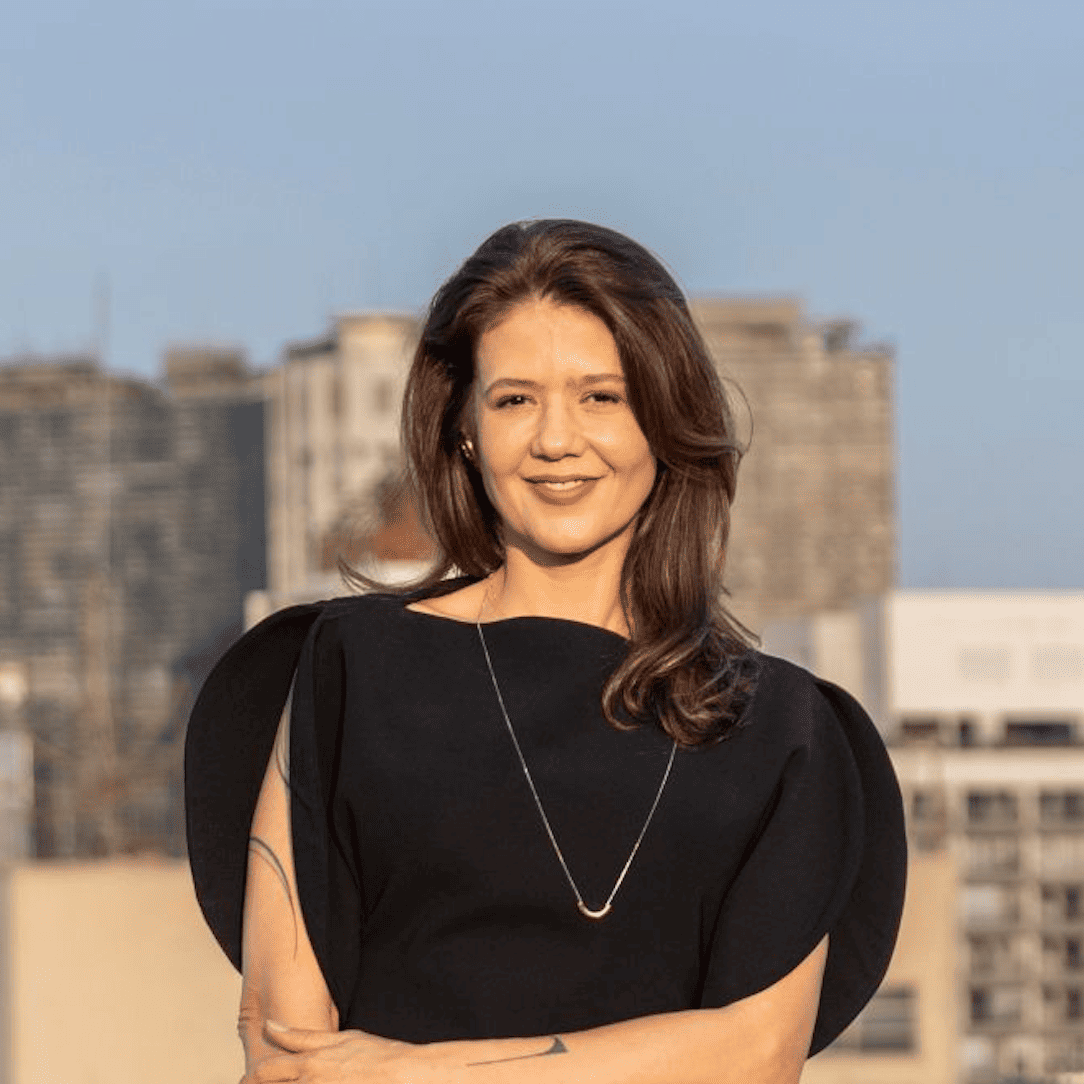
Alexandra Làssance
Decision Architecture for Leaders at Critical Inflection Points Biographical Narrative & Sustainable Futures
Founder of H2+ Lab. Works with Decision Architecture applied to senior professionals and organisations undergoing structural transition.
Related Posts


The Complex Sale Got More Complex
By Marcela Sperduti